Author: Admin

  • How to prepare for a job interview in Mongolia

    How to prepare for a job interview in Mongolia

    Job interview is a stage for you to show off yourself and get the job you want. Unfortunately, many candidates fail to use this opportunity.

    Simple google search on interview preparation will tell you to do the following:
    – To do your research about the organization, its projects, products and recent news.
    – To analyze the role: fully understand the job description, prepare questions for clarity, provide an example of similar experiences,
    – To prepare your questions about the team or department, organization’s goals and values.

    All these seems to be an obvious feature to prepare. However, when conducting an interview with a potential candidate, I was surprised to see how many actually skip these steps. Most candidates skim through the vacancy ad without further research. It was obvious from the basic questions candidates ask. Some candidates even went on to request the interview team, to tell them about the organization and the project. Interview time is very limited. Potential employers would like to get as much information about you as possible and make a decision if you are suitable for the job. Nobody has time to inform you about the basics. Hence, it is better to do your homework, do the research, at least go to the organization’s website and social media.


    This, however, doesn’t mean you can’t ask any questions. In fact, you should ask questions. Asking a question, somehow refrained in Mongolian culture. From childhood we were raised to hold our opinions against adults, to be respectful and polite to them. Because of our culture, during the seminars and meetings, especially where most of the participants are strangers to each other, people ask minimal questions. Similar trend is evident at the interview. Towards the end of the interview, when the interview team asks “if there are any questions you would like to ask?”, most candidates respond “no”. Those who ask questions to clarify the job description or the organization’s long-term goal shows understanding and genuine interest in that position. Consequently, those stands out.
    During the preparation, if no question pops up to your mind, imagine that you are actually hired and working in that position. You start your job, you’re doing the tasks described in the job description, step by step. Imagine daily tasks and then long term, one year, two years… Questions will start emerge. Some questions might seem obvious or insignificant to you, but it will show how detailed you have thought about the position. In the end, there is no stupid question.

    There are many other ways to prepare for a job interview. One example would be watching a TV show, a useful one. The other day I have watched TV show on Central TV Mongolia – “the Interview” it’s called. I highly recommend this show to the new job seekers, especially those who don’t have any experience with an interview. In this show, actual organizations conduct an interview with potential candidates. The episode I have watched was with the MCS Coca Cola. You can learn various things from this show, including:
    – have a glimpse to the management team, including the CEO of the organization,
    – the questions they ask,
    – technical exams they take,
    – how to present yourself, including the outfit,
    – analyze the answers that candidates give, and think about the responses you would give,
    – analyze the body languages both the interview team’s and candidates’ side, when does they feel relaxed, when not.
    – impression that candidates left and which ones are selected at the end.


    Another great way to prepare yourself for a job interview is using an AI. The Lambda Global has Skills application to help the job seekers to enhance their relevant skills. From Skills you can go to the Career advice section, where it has an AI interview question generator. You should simply register as a talent to the Lambda Global. Then, upload your CV and click on the job position you would like to apply. You can select the language of the interview. Based on your CV and the job description AI will generate the potential questions with the possible answers. These questions will help you identify the matching skills that you have failed to recognize. Especially if you have rich experience in various organizations. AI is great at capturing even the little details you have mentioned in your CV. It not only provides questions, but also an opinion if your skills, at least the ones you have mentioned in your CV, matches the job description. It is the most important question that employers try to answer during the interview.

    The last, but perhaps the most important preparation would be a question to ask from yourself. Why do I want this position? Why do I want to work in this organization? The real passion radiates. Poor preparation is a sign of low interest in that job. Therefore, prepare yourselves well for the job you really want.

  • Salary Trends and Compensation Insights in Mongolia

    Salary Trends and Compensation Insights in Mongolia

    I would like to prefix this article by telling a story about a mid-level employee in  Ulaanbaatar city who switches jobs for a 30 percent salary increase. Six months later, he moves  again for slightly more. His income rises, but his role barely changes, his skills stagnate, and the  company he left is still trying to fill the same position. This cycle is becoming increasingly  common in Mongolia’s job market, where rising salaries are not solving hiring problems but  quietly making them worse. At first glance, this makes little sense. Higher salaries should attract  better talent and fill any open roles in a matter of few days. But the current reality of our situation  tells a different story.  

    Sure, compensation is increasing which is a good thing. But it is not solving the deeper  issues in the labor market. Looking into a data from the National Statistics Office of Mongolia, it  clearly demonstrates an upward trend in wages. The median monthly salary has been steadily rising  in recent years, intensifying from around 1.30 million MNT before 2022 to 1.75 million MNT in  2023. In 2024, it shot up to 2.41 million MNT. By 2025, the median wage reached approximately  2.88 million MNT, with a sharp jump beginning in early 2024. The realistic salary reports are recently published by a private and independent source;  Lambda.Global – a rising talent platform with realtime database collected from actual professionals deployed to the private companies and corporate in Mongolia in last couple of years. The median salary here is at least 20-30% more on Lambda’s Annual Salary Report than the one published in NSO Mongolia. It is understandable that state report include government workers including teachers, nurses, and city service workers and so on..

    However, the same data also reveals a persistent gap between average and median wages.  This gap isn’t only a statistical detail. It can be seen as a sign of income inequality. A higher average  wage in comparison to the median means a smaller group of high salary earners is pulling the  average up, while most employees earn significantly less to make up for the median. In other  words, salary growth is real, but it is uneven. This unevenness becomes even more obvious when  looking across industries. Mongolia does not have one salary market. It has several, and they are  disconnected from each other. Due to exports and foreign investment, the mining industry offers  significantly higher salaries than most other sectors in Mongolia. Whereas, hospitality, retail, and many service jobs remain far behind. Understandably, the latter sectors realistically will not keep  up with heavily invested industries like mining. But the result of it all is a fragmented economy  where compensation depends mostly on industry rather than skill alone.  

    This trend is closely tied to the broader picture. According to the World Bank, Mongolia’s  recent economic recovery has been largely driven by coal exports and mining revenues. Thanks to  the mining sector and other huge players in the economy growth of Mongolia, household income  and government spending advanced in 2023. However, rising wages and expenditure are also likely  to increase inflation. This ends up creating a cycle where higher pay comes from growth but also  leads to higher prices for everything.  

    But the core issue is not that salaries are increasing. The issue is how and why they are  increasing. Many companies in Mongolia are competing for talent by raising salaries rather than  building long term talent pipelines. Employees who join for higher pay often do not stay long term. They move again when another company offers slightly more. From the employee’s perspective, this is obviously a rational decision. If companies are not offering growth, training, or  clear career paths, salary becomes the only lever that matters. From the company’s perspective,  this leads to constant rotation and rising salaries.  

    This pattern can already be observable in today’s market. On hiring platforms like  Zangia.mn, many mid-level roles are bundled with similar salary ranges between 3.0 and 3.5  million MNT. However, on the newest platform – Lambda.Global, the average compensation tend to be much higher between 4.0 to 5 million MNT as these offers are more focused on top talents or highly skilled specialists. Simultaneously, many job postings do not clearly communicate total compensation or benefits for being hired to their companies.

    Salary is emphasized at the top of all other things,  while training, development, or long-term incentives are either unclear or absent within their  offers. As a result, companies have a narrow competition based almost entirely on who can pay  the most amount of money. The consequence of this approach is that these companies end up  overpaying for positions without improving productivity. Employees gain higher salaries in the  short term, but without structured development, their long-term career growth becomes  questionable.  

    This imbalance is also geographic. Jobs with higher salaries are largely concentrated in  Ulaanbaatar city, the capital of every Mongolian’s heart. Opportunities in other regions and  provinces are still limited, leading more people to move to the city. The challenges in the capital  go beyond employment. As highlighted by the World Bank, living conditions in ger districts  negatively affect productivity, health, and long-term earning potential. Employees facing poor  housing and environmental conditions are more likely to be late to work, earn less, and exit the  workforce earlier. This turns urban inequality into a labor market issue.  

    All of these factors point to the same conclusion. Mongolia’s salary growth is not being  driven by a coordinated improvement in the labor market. It is being pushed by specific sectors,  especially mining, and amplified by short term hiring strategies. The problem is not that companies  are paying too much. It is that they are solely relying on salary as the primary solution to strategic  and structural challenges. A more sustainable approach will require a shift in how companies think  about talent. Compensation still matters, but it cannot be the only focus. Essential long-term  investments are in training, internal mobility, and leadership development. Employees need to see  their future within an organization, not just a paycheck for the upcoming few years.  

    The current method of increasing wages is already reaching its limit. Rising salaries have  not eliminated hiring difficulties. Retention of employees remains a challenge to many companies.  And the gap between high paying sectors and the rest of the economy continues to widen as we  move on with our lives. The next phase of Mongolia’s labor market will depend on whether  companies can move beyond reactive salary increases. Those that continue to compete only on pay  will face increasing costs without solving their talent problems. Those that invest in developing  people, building skills, and creating clear career paths will have a more stable and competitive  workforce. 

    Mongolia’s economy remains positive, supported by its resources sector and growing  economy. The opportunity is clear. The challenge is execution. To turn higher salaries into lasting  growth, companies should think long-term instead of just focusing on quick wins for the day. Those  that continue to rely on salary alone will face rising costs without solving their hiring challenges.  Those that invest in people will define the next phase of Mongolia’s workforce. Mongolia is not  facing a wage problem. It is facing a talent development problem. 

    Sources:  

    https://lambda.global/salary

    https://lambda.global/salary-report-2025

    https://www.nso.mn/en

    https://www.worldbank.org/ext/en/home

  • Prepare the Bucket Before the Milk: Mongolia’s Closing Window on Young Talent

    Prepare the Bucket Before the Milk: Mongolia’s Closing Window on Young Talent

    What is your long-term top talent recruitment strategy? Are you building an organization with a big goal, where young people eager to join and stay. If the answer is yes, you’re  on the right track.  

    Statistics telling us that by the year of 2035, working age people will comprise 64,7% of  the total population of Mongolia. Youth born after the 2017 will start joining the labor market. Many Asian countries, notably South Korea and Japan are dreaming of such  population.  

    Let’s look at the “demographic window1” numbers closely. According to the Mongolian  population census, in 2025 there were 452,890 youth aged 20-29. This number is  estimated to grow to 657,203 by the year of 2035.  

    You might think, what is the significance of that, we have high number of youth today, but  we are still having a difficulty to find the right candidate with sufficient soft skills. Good  news is that new generation is likely to have better soft skills and technological skills compared to the current working age population, as they have more enabling environment  to develop relevant skills both inside and outside the classroom. Private secondary  schools have started to focus more on soft skills aspect. Not only private schools, with  the support of international fundings project-based learning method, where children  improve their soft skills while working on a team project, is being implemented even at  the soum level public schools. 

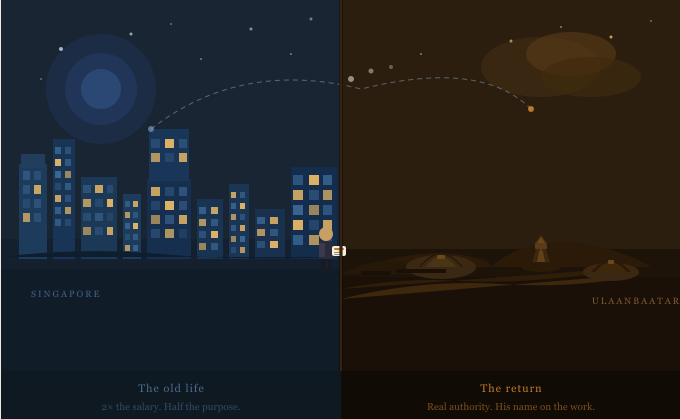
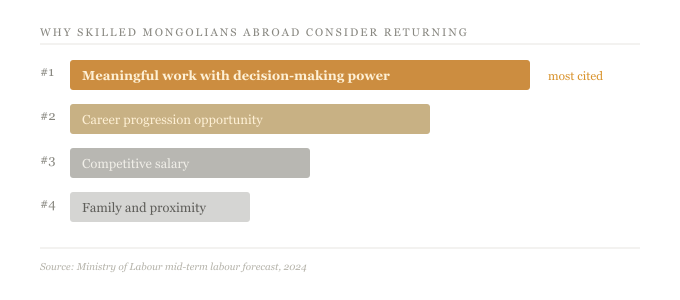
    Each year 15,000-25,000 secondary school graduates are choosing to study abroad  exposing themselves further to the world class education and opportunities. Many choose  to stay in the respective countries after their graduation. On the other hand, with the rising  global tension and uncertainty, a good many from the current Mongolian diaspora are  choosing to return to be part of a bigger cause in the home country. 

    With stable GDP projection, the labor demand in finance, insurance, professional  scientific and technical services are estimated to grow. These sectors demand employees  with higher education degree. Consequently, it is the time, like our Mongolian idiom says,  “to prepare the bucket before preparing the milk”.  

    To be better prepared for the future, we should analyze today’s labor market condition. Many employers are struggling to keep the young generation in the workplace. The study  on the youth employability landscape in Mongolia sheds light on some of the reasons  behind it: 

    – Employer’s constant request to work overtime  
    – Job-title based salary scale  
    – Female youth face double disadvantage, lower salary than men, questions about family planning during the interview, workplace harassment among others.  

    1 High number of working age people and low number of pensioners in the year of 2020-2040. 

    To attract and keep the highly educated youth in the workplace, we have to tackle these existing human resource practices. We are emphasizing the following two points: 

    Organizational HR policy  

    Bottom-up approach can make a significant impact. Apart from following and ensuring  compliance with the labor law clauses related to female employees, business and  employers’ can have a HR policy that increases their female employer’s retention rate. I  can tell this from my personal experience of benefiting from such policy both financially  and emotionally. I have worked in an international organization operating in Mongolia for  many years. It had policy to provide two months of paid maternal leave after the employer  gives birth. Two months of full salary aside the social insurance allowance was a great financial support for a young family. It was a big stimulus for women to join and remain in  the organization up to six years. 

    Data driven decision  

    We are all aware that data driven decision is indispensable part of our daily work in this  AI era. However, it was questionable, if there are systems for human resources and  executives to make a sound data driven decision. Lambda Global is developing an AI  driven system to enhance the human resources efficiency. It has started an initiative to  be not only an AI driven new generation talent connection, but also a leader in the sector  to shape a transparent and fair labor ecosystem in Mongolia. 

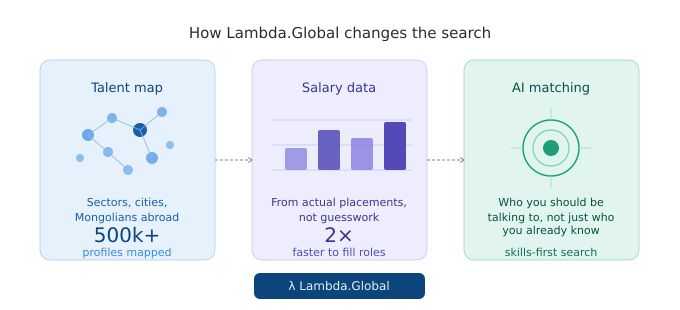
    As mentioned above, one of the major issues youth are facing is a fair salary. Lambda.Global is trying to address this matter by introducing a transparent and reliable salary  information resource. It produces a salary report of each sector based on multiple  information resources, including the real market information.  

    The salary report provides: 

    1. Insight to the average and highest salary  
    2. Top five positions  
    3. Workforce demand 
    4. Where the skills mismatch is lying  
    5. Global trends 
    6. Actionable insights for employer’s and employees.  

    By joining the Lambda Global, organizations can greatly benefit and together create a fair  labor ecosystem, that could address many of the labor market pitfalls.  

    Top talents shape the modern-day economy, country’s development, business  competitiveness and innovation speed. We, Mongolians are rich with rising young  population. Hence, every organization has the opportunity to leverage this potential and  aspire to the greater goal. 

    References: 

    1. Entrepreneurship-focused Socio-Emotional Skills For The Most Vulnerable Youth  In Rural Mongolia project, Save the Children Mongolia, 2025, 

    2. Labor Market Of Mongolia: Mid-Term Demand and Supply Forecasting Study Report, the  Ministry Of Labour and Social Protection, Research Institute Of Labour And Social Protection,  MMCG,2024 3. Mongolia Economic Update, the World Bank, 2026 

    4. Population of Mongolia, National Statistics Office of Mongolia, 2025 

    5. Sector Salary report, Lambda Global,2025 

    6. Skills demand in Mongolia: Main Findings of the Skills Module of the Barometer Survey, the  World Bank, 2022 

    7. Youth Employment Forum highlights, Unread, Asian Development Bank, the Ministry of Labour  and Social Protection, 2025 

    8. Youth Employability Landscape Study of Mongolia, the Lorinet Foundation, 2022.

  • Hiring in Mongolia Is Broken. Here’s What’s Actually Causing It.

    Hiring in Mongolia Is Broken. Here’s What’s Actually Causing It.

    Low unemployment and a growing economy, yet companies cannot fill their most critical roles. The problem runs deeper than most employers want to admit.

    Mongolia’s economy has grown considerably over the past decade, largely driven by its mining sector and the steady expansion of financial and professional services in Ulaanbaatar. Unemployment sits near historic lows. The number of formally registered companies has risen steadily. And yet, if you talk to hiring managers across industries, the
    picture they describe doesn’t feel like a tight labor market. It feels like a broken one.

    Senior roles sit open for six to twelve months. Qualified candidates apply and hear nothing back. Salary expectations between employers and candidates differ so widely that negotiations often collapse before they begin. And a disproportionate share of hiring decisions are made not through formal processes, but through personal networks quietly.

    Ask anyone who has hired or been hired in Mongolia’s professional market, and they will describe some version of this. What most conversations skip is why it works this way and what it would take to change.

    The network works. Until it doesn’t.

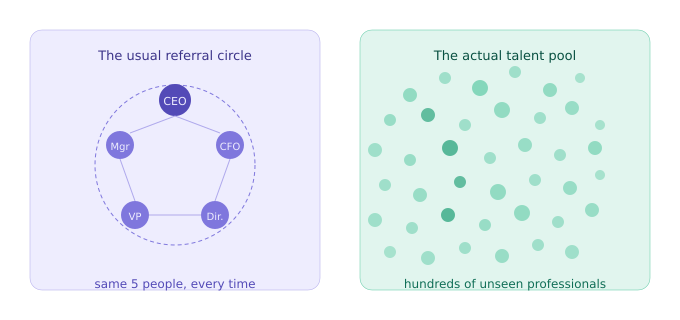
    Mongolia’s professional class in Ulaanbaatar is small enough that most hiring managers already know who they’re looking for before a search begins. In that context, relationship based hiring isn’t simply a habit, it’s an information strategy. A referral arrives pre-vetted, with the recommender’s reputation on the line if the hire goes wrong. In a market without reliable salary data or standardized credentials, a referral carries more signal than a resume.

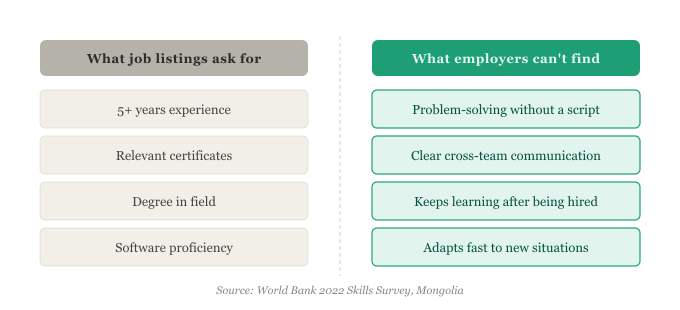
    The cost is who gets excluded. Graduates from regional universities, returning professionals, and candidates who simply haven’t had time to build the right connections get filtered out before anyone reviews their qualifications. The market doesn’t exclude them because they’re unqualified. It excludes them because they’re unfamiliar, and in a
    relationship-driven system, the two get treated the same way. Companies fishing the same small pool compete over the same people, bid salaries up reactively, and convince themselves the market is the problem. It feels tight partly because they’ve made it tight.

    The network works. It just works better for some people than others. In a market this small, that is not a minor inefficiency. It is the defining feature.

    The formal process nobody believes in

    Most mid-size and large Mongolian companies post jobs formally. But the process rarely works the way it’s supposed to, and both sides have learned to expect little from it.

    From the employer side, too many applications, too little relevance, and a hiring process where effort rarely matches outcome. Many HR managers admit they post roles publicly out of procedure or policy, while already knowing who they intend to hire.

    From the candidate side, the experience is just as discouraging. Applications go unanswered. Interviews run multiple rounds and then go silent. Roles turn out to have been filled through referral weeks before the listing went live. For candidates who haven’t been through this before, it’s confusing. For those who have, it becomes a reason to stop trying altogether.

    Both sides are responding rationally to an unreliable system. And both responses make it more unreliable. When employers don’t invest in the formal process, it produces poor results. When candidates lose confidence in it, application quality drops. The cycle is self reinforcing, and it won’t break until someone decides to go first.

    Nobody knows what anything pays

    Mongolia has no standardized public compensation data for most professional roles. Salary decisions come down to internal precedent, peer comparisons, or whatever a candidate names in the room. Similar roles pay very differently across companies, with no logical relationship to seniority or scope. Candidates with insider access negotiate far better
    outcomes than equally qualified peers who don’t, not because they’re more valuable, but because they have information others lack.

    Above all of this sits the mining sector premium. For instance, Oyu Tolgoi, Erdenet, and Erdenes Tavan Tolgoi pay at levels most non-resource companies structurally cannot match, not because those companies are poorly managed, but because resource extraction
    generates margins that banking, technology, and professional services don’t.

    A senior operations or engineering professional in the resource sector earns substantially more than an equivalent role anywhere else in Ulaanbaatar. Companies outside the resource orbit are outbid before negotiations even begin. Most of them know it, and most haven’t found a
    meaningful answer to it.

    Professionals who discover they were underpaid don’t accept it quietly. They leave and in a small market, that story travels.

    The professionals who leave, and why

    Mongolia’s labor emigration is more skilled than public conversation acknowledges. South Korea’s Employment Permit System draws Mongolian workers in significant numbers each year, and the cohort increasingly includes people with technical qualifications and university degrees, not only those seeking unskilled work. Japan and Germany have formalized bilateral agreements opening structured pathways for Mongolian professionals in engineering, healthcare, and logistics.

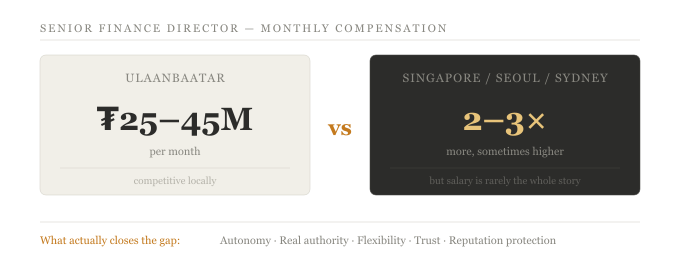
    The economics are straightforward. Foreign wages are multiples of comparable domestic roles. Career progression is more clearly structured. Remittances have become a meaningful contributor to Mongolian household income nationally, which looks positive on paper, but signals something uncomfortable. For a growing share of Mongolia’s most capable workers, staying home is the financially irrational choice. The country isn’t losing its least productive people to emigration. It is losing some of its most capable, precisely because they have the qualifications and adaptability to go.

    What the better companies are doing

    A minority of Mongolian organizations navigate this environment noticeably better than their peers, and they are not all paying the most. They hire earlier, building relationships with universities, including regional ones outside Ulaanbaatar, and bring in graduates through structured development programs. The result is professionals who stay because they were developed by the organization, not simply bought from a competitor.

    They also make their processes legible, clear timelines, consistent communication, and honest feedback. In a market where most hiring experiences are frustrating, this alone builds a reputation that attracts stronger candidates. And the most effective organizations treat talent as a leadership issue, not an HR function, because how executives talk about growth and promotion determines whether ambitious people see a future there at all.

    The honest conclusion

    Some of Mongolia’s hiring dysfunction is structural, including the mining premium, the absence of compensation data, and years of underinvestment in workforce development. No single employer fixes those alone.

    But a significant share is self-inflicted. Employers who hire only through networks, run processes they don’t believe in, and treat development as a cost are sustaining the very shortage they complain about most.

    The companies best positioned five years from now are building their talent pipeline today. The market is fixable. It just requires employers to stop waiting for someone else to fix it first.

  • Leadership Development in Mongolian Education

    Leadership Development in Mongolian Education

    What makes a teacher good? This is the question a lot of young Mongolian educators ask themselves. Is it caring about the students, or following the curriculum religiously, or getting along with their administrators? Many teachers try to become better educators, but their growth is often shaped by school leadership. 

    As we observe enthusiastic young professionals entering the education sector, they also face challenges working alongside more experienced colleagues and leaders. In a rapidly digitalizing Mongolia, the gap between how we lead and how we learn has never been wider. Below, we explore four of the most common leadership gaps school administrators face when working with Gen Z teachers and how to avoid them. 

    1. The Negotiation Gap and Compensation Friction 

    One of the most common sources of tension in modern Mongolian schools is the friction caused by differing approaches to compensation. For senior teachers, salary was often a fixed, non-negotiable metric tied strictly to seniority. However, Gen Z professionals are entering the field with a different mindset: they are more likely to research market rates and boldly negotiate for their value from day one. I’ve observed that a simple conversation about market value can turn a collaborative hallway into a divided one, simply because the leadership hasn’t updated its approach to pay transparency

    How to avoid: When leadership grants these market-competitive salaries to attract young talent without addressing the existing pay scales of long-term staff, it creates a “salary elephant in the room”. Moving toward transparent, merit-based pay structures will also eliminate salary friction by rewarding specific achievements rather than just years of service. 

    2. The Traditional to Digital Gap 

    While traditional textbooks have their place, they cannot be the only tool in a 2026 classroom. As the education industry grows digitally day by day, so should we. The second leadership gap is the hesitation to integrate modern technology into the curriculum. Many veteran leaders view digital tools like interactive platforms, AI-assisted grading, or global research databases as “distractions” rather than “accelerants.”

    The Solution: To modernize Mongolian schools, leadership should embrace reverse mentorship where young teachers share digital skills while veterans provide essential pedagogical wisdom. Furthermore, investing in a centralized digital infrastructure reduces the heavy burden of manual paperwork, finally allowing the entire staff to focus on high-impact teaching. 

    3. The Overseas Expertise Gap 

    Let’s take a moment to think about educators and parents who return to Mongolia after studying or working abroad, hoping to find schools that offer the same quality of education they experienced internationally. However, many school administrators still prioritize local “time-in-service” over global expertise. As a result, a returning professional with a Master’s from Harvard or years of teaching experience in Singapore may still be treated as a “junior,” simply because they have not spent years navigating the local system. If Mongolian schools want to build globally competitive learning environments, leadership must recognize and value international experience as a strength, not as something “unfamiliar.” 

    How to avoid: To grow as global leaders, we must treat international exposure and digitalized classroom experience as strategic assets, not threats. Schools must move away from 

    bureaucratic seniority and create roles that allow returning talent to act as allies in the school’s growth, ensuring that global standards are integrated into the local system. 

    4. The Foreign Preference Gap 

    The final leadership gap is the tendency to prioritize foreign educators over highly qualified Mongolian professionals, including those with international training, simply based on nationality. In many international and private schools, there is a visible “two-tier system” where foreign hires receive higher salaries, better housing allowances, and more leadership opportunities than their Mongolian counterparts, even when the local teacher has superior qualifications or years of experience with Mongolian students. 

    The Solution: To avoid this, school boards must implement Equity-Based Hiring. Instead of a “Local vs. Foreign” pay scale, schools should adopt a “Unified Professional Scale” based on credentials, years of experience, and specific skills like digital fluency. Leadership should prioritize “Cultural Bridges,” those who understand the Mongolian heart but can teach at a global level as the primary candidates for senior leadership roles. 

    Conclusion 

    The challenges currently facing Mongolian schools are not just internal hurdles; they are a reflection of a nation in transition. The tension between tradition and digitalization, or local seniority and global expertise, is where the future of our education system will be decided. The true success of Mongolian education will be measured by our ability to transform our schools into spaces where talent, regardless of age or nationality, is the only currency that matters. 

    Key Takeaways for Modern School Leaders 

    Establish Merit-Based Transparency: Make pay structures clear and reward specific digital certifications and student impact instead of years of service to reduce salary-related tension. 

    Implement Reverse Mentorship: Bridge the digital divide by pairing tech-savvy Gen Z teachers with veteran educators to trade technological skills for pedagogical wisdom. 

    Recognize Global Equivalency: Eliminate the “junior trap” by valuing international degrees and global classroom experience as important skills that can be applied immediately in leadership roles. 

    Prioritize Cultural Bridges: Reduce the nationality-based “two-tier system” in hiring. Invest in Mongolian educators who understand the local heart but possess the global mindset to lead. 

    Automate to Elevate: Use centralized digital systems to eliminate the “paperwork burnout” that currently drains our most enthusiastic young teachers. 

    Strong leadership development does more than strengthen the faculty; it determines the direction, culture, and long-term credibility of an entire educational institution. 

  • Why Mongolian Youth are Retreating from the “Salary War”

    Why Mongolian Youth are Retreating from the “Salary War”

    From Survival to Self-Expression 

    The job market in Mongolia is witnessing rapid changes in generational attitudes toward work. For the earlier generations, a job was a tool, a necessary mean to support a family and earn a living. For GenZ and Millennials, work is a critical part of their lifestyle, an expression of their value systems and an important mode of self-expression. 

    Modern Mongolian professionals quit unhealthy work environments with the same zeal they quit toxic personal relationships. It is the death of the era when employers could attract talents just by paying more. That is why The new era has set in which calls for commitment to shared values, commitment to company culture, and commitment to psychological safety. 

    “Red Flags” and the Cultural Filter 

    Today’s job seekers no longer passively attend interviews, merely marketing their skillsets. On the other hand, they examine companies to ensure that they fit their personal code of ethics. 

    Management styles, the demand for unpaid overtime, and conflict within teams are now major red flags deal breakers for top talent. They know that they can only bring out their best if given a supportive environment based on trust rather than micromanagement. It is not enough for organizations to have a boss, but they must communicate a healthy working culture. Companies that view employees purely as resources will experience massive talent shortages in the future. 

    The Power of Candidate Experience 

    The era of making blind decisions based entirely on salary is over. Candidate experience is the emotional experience a candidate feels and the quality of interaction they get throughout the process. 

    Modern youth are asking important questions: Does this company really value mental health? Do they invest in employee lifelong learning and growth? Most importantly, do they provide work-life balance? In the current Mongolian context, office comfort has changed. It now includes trust-based autonomy, flexi-hours, and policies that ensure employees’ well-being ahead of perks such as sofas or free coffee. 

    Digital Transformation and the Era of the “Transparent” Company 

    The information that previous generations needed to locate employment in newspapers is now acquired by contemporary talent with a single click, via LinkedIn, Zangia, and Lambda.Global. Digitization has made companies more transparent. 

    According to the Digital 2024: Mongolia report, internet access has reached 82% of the population, with LinkedIn users exceeding 540,000. This represents a transformation in the recruiting landscape. Data indicates that over 90% of candidates do preliminary job searches online and evaluate a company’s cultural standards via social media. They make investigations through the Facebook and Instagram pages to check the environment before applying for a job. If a company appears outdated or locked down on social media, it immediately raises such red flags and discourages talent from applying. 

    Matching the Pace of “Trends” 

    Recruitment in today’s world is not just an HR task but is an amalgam of watching the latest trends, building the desired culture and marketing. Attracting top talent means a company’s values must also strike the new generation, who prize sustainability, equity, and innovation above all else. 

    Researches reveal that only 35-45% of all employees in Mongolia feel assured and satisfied with their current jobs (ibid). The rest is disengaged and ready to leave, finding better workplace fulfillment in competing firms, encouraged by poor leadership or lack of employee growth opportunities. Being out of style today means more than just failing to keep up with technology, it means failing to understand mindset. To stay competitive you must turn your workplace from a cubicle prison into a creative hub in which talent can thrive. 

    Becoming the Pioneers of a New Era 

    Winning in the Mongolian talent market is for those that understand the needs of humans along with being able to keep track of current trends. This is not just the battle of salaries anymore, this is the battle for meaning, purpose and culture. The Mongolian youth are not looking for jobs. They want a home, not just a house, a place with enough stimuli for development, respect, and mental peace. 

    Companies that recognize this demand and take action will secure the future of Mongolia’s talent pool. Recruitment in the new era is about creating an environment to enable people reach their highest potentials. 

    1. Digital 2024: Mongolia – DataReportal Report 

    2. LinkedIn Global Talent Trends – Workplace Insights 

    3. National Statistics Office of Mongolia – 1212.mn 

  • Дэлхийн болон Монголын үнэгүй AI сургалтууд  2026

    Дэлхийн болон Монголын үнэгүй AI сургалтууд 2026

    AI-г сурах хамгийн зөв цаг бол өнөөдөр. Хамгийн буруу шийдвэр бол “дараа сурна” гэж хойшлуулах.

    2026 онд AI бол хөгжүүлэгчдийн л хэрэг биш. Маркетер, менежер, санхүүч, багш, сэтгүүлч — бүх мэргэжлийн хүмүүст AI-ийн ойлголт, чадвар шаардлагатай болсон. Сайн мэдээ: дэлхийн шилдэг их сургуулиуд болон AI компаниуд үнэгүй, чанартай сургалтуудыг нээлттэй болгосон.

    Муу мэдээ: ихэнх нь англи хэл дээр. Тиймээс бид lambda.global/ai дээр монгол хэл дээрх 150+ AI сургалтыг нээлттэй болгосон — ажлын бүтээмжээ шууд өсгөх практик контент.

    Энэ нийтлэлд дэлхийн хамгийн нэр хүндтэй 6 үнэгүй AI сургалтыг нэг дор цуглуулсан — тус бүрийн давуу тал, хэнд зориулагдсан, юу сурах вэ гэдгийг тайлбарлана.


    1. Harvard — CS50’s Introduction to AI with Python

    🔗 cs50.harvard.edu/ai

    Harvard-ийн CS50 цуврал бол дэлхийд хамгийн алдартай Computer Science хичээлүүдийн нэг. AI хувилбар нь хайлтын алгоритм, machine learning, neural network, NLP зэрэг сэдвүүдийг Python дээр гар дээрх төсөлтэй хамт заадаг.

    Хэнд зориулсан: Python-ий суурь мэдлэгтэй хөгжүүлэгчид, оюутнууд
    Хугацаа: 7 долоо хоног (~20 цаг/долоо хоног)
    Гэрчилгээ: Үнэгүй (edX дээр audit), төлбөртэй verified certificate боломжтой


    2. Google — Learn AI Skills

    🔗 ai.google/learn-ai-skills

    Google нь 2026 онд бүх AI сургалтаа “Google Skills” нэрээр нэг платформд нэгтгэсэн. AI Essentials курс нь кодчилолгүй, бүх мэргэжлийн хүмүүст зориулсан — prompt engineering, шийдвэр гаргалт, контент бүтээх зэргийг заадаг.

    Хэнд зориулсан: Бүх мэргэжлийн хүмүүс, код шаардахгүй
    Хугацаа: ~10 цаг
    Гэрчилгээ: Google AI Credential


    3. OpenAI Academy

    🔗 academy.openai.com

    ChatGPT бүтээгчид өөрсдөө нээсэн үнэгүй сургалтын платформ. AI-ийн үндэс, prompt engineering, бизнесийн хэрэглээ, хөгжүүлэгчдэд зориулсан API сургалтуудаас гадна workshop, вебинар, олон нийтийн бүлгүүд орно.

    Хэнд зориулсан: Бүх түвшин — эхлэгчээс хөгжүүлэгч хүртэл
    Хугацаа: Өөрийн хурдаар
    Гэрчилгээ: OpenAI Certification (2026 оноос)


    4. Anthropic Academy — Claude

    🔗 anthropic.skilljar.com

    Claude AI бүтээсэн Anthropic компаний албан ёсны сургалт. 13 үнэгүй курс, бүгд гэрчилгээтэй. AI Fluency суурь курсаас эхлээд Claude API, Claude Code, MCP protocol хүртэл гүнзгий техникийн сэдвүүд хамарна.

    Хэнд зориулсан: Хөгжүүлэгчид болон бизнес хүмүүс аль аль нь
    Хугацаа: Өөрийн хурдаар (flagship курс нь 8+ цаг)
    Гэрчилгээ: Anthropic албан ёсны гэрчилгээ, LinkedIn-д нэмэх боломжтой


    🇲🇳 5. Lambda.Global — Монгол хэлээр

    🔗 lambda.global/ai

    Lambda.Global-ийн нь монгол хэл дээр, ажлын бүтээмжид чиглэсэн 150+ практик AI сургалтыг нэг дор санал болгодог. Маркетинг, борлуулалт, HR, санхүү, удирдлага — мэргэжил бүрт.

    Хэнд зориулсан: Монгол хэлээр суралцахыг хүсэж буй бүх мэргэжлийн хүмүүс
    Хугацаа: 150+ курс, өөрийн хурдаар
    Гэрчилгээ: Үнэгүй


    Аль сургалтаа хэрхэн сонгох вэ?

    Бүгдийг нь зэрэг эхлэх гэж бүү оролд. Шилдэг нэгийг нь сонгоод эхэл.

    Програмчлалын мэдлэгтэй бол → Harvard CS50 AI эсвэл Anthropic Academy-ийн техникийн track. API, Claude Code, MCP зэрэг бодит хөгжүүлэлтийн ур чадвар олж авна.

    Менежер, бизнес удирдлага бол → Google AI Essentials эсвэл Oxford AI Essentials. Код шаардахгүй, стратегийн ойлголтод чиглэсэн.

    Монгол хэл дээр шууд ажилдаа хэрэглэх бол → Lambda.Global 150+ курс, мэргэжил бүрт тохирсон, практик дасгалтай.

    “AI сурах хамгийн сайн арга бол AI ашиглаж эхлэх. Онолоос биш — хэрэглээнээс.”

    Яагаад одоо эхлэх ёстой вэ?

    McKinsey-ийн 2025 оны тайлангаар дэлхийн компаниудын 72% нь AI-г ямар нэг хэлбэрээр нэвтрүүлсэн. Монголд энэ тоо бага ч хурдацтай өсөж байна. AI-г эзэмшсэн хүмүүс болон компаниуд 2–3 жилийн дотор бусдаас тод ялгарна.

    Хамгийн аюултай нь “AI намайг орлохгүй” гэсэн бодол биш — “Дараа сурна” гэсэн хойшлуулалт.

    Монгол хэл дээр AI сурахад бэлэн үү?

    Lambda.Global дээр 150+ үнэгүй AI сургалтаар ажлын бүтээмжээ шууд өсгө.

    👉 Үнэгүй эхлэх → lambda.global/ai


    Компаниудад

    Байгууллагынхаа ажилтнуудыг AI-д сургах хэрэгтэй бол Lambda.Global харилцагч компаниуддаа зориулж үнэ төлбөргүй нэмэлт үйлчилгээ байдлаар санал болгодог. Ажилтнуудаа AI-ийн чадвартай болгох хамгийн хялбар, хамгийн хямд зам.

    📩 Холбоо барих: hello@lambda.global


    Хадгалаад найзуудтайгаа хуваалцаарай. AI сурах нь нэг хүний шийдвэр, түгээх нь олон хүний ирээдүй.

  • Ажлаас халшрах хам шинж танд байна уу?

    Ажлаас халшрах хам шинж танд байна уу?

    Бүтэн цагаар ажиллаж байгаа хүн болгон л өдрийн 2/3 цагийг ажилдаа зарцуулж байгаагийн хувьд ажлын орчин, хамт олон, компанийн соёл, ажлын ачаалал зэрэг хүчин зүйлс амьдралын чанарт маань шууд нөлөөлж байдаг.

    Мэдээж хүн болгон л ажилдаа дуртай, хийж байгаа зүйлсээсээ үнэ цэн мэдэрч, компанидаа хувь нэмрээ оруулж, хамт олондоо үнэлэгдэхийг хүсдэг байх. Гэтэл эсрэгээрээ байх тохиолдол цөөнгүй. Яагаад хичээгээд байхад хүссэнээр болдоггүй юм бол? Асуудал компани, удирдлагад тань байна уу аль эсвэл танд өөрт тань байна уу?

    Асуудал аль ч талд байх боломжтой. Компани эсвэл удирдлагын зүгээс ажиллах тэгш боломж олгохгүй, хэт их ажлаар шахах, цалин хөлс урамшууллыг гүйцэтгэсэн байдлаар нь олгохгүй, өсөж хөгжих потенциал байхад дардаг, ажил хуваариладаг хэрнээ хэт үгүйсгэсэн сөрөг хандлагаар харьцдаг зэрэг чамайг зүгээр л нэг ажил гүйцэтгэгч машин гэж харж байгаа бол та ажлын орчиноо солих талаар бодох цаг нь болжээ. Lambda дээр нийтлэгдсэн ажлын байрнуудыг сонирхоод үзээрэй. https://www.lambda.global/

    Аан харин дээрх зүйлс тулгараагүй байхад ажлаа өмнөх шигээ гүйцэтгэж чадахаа больсон, ажлаасаа болон хамт олноосоо урам зориг авахаа больсон, эрч хүч буурч ажлаа арай гэж хийж байгаа бол та өөрөөсөө асуудлыг хайх нь зүйтэй болов уу. Учир нь ажил дээр ч тэр, амьдрал дээр ч тэр тодорхой хугацааны дараа бид хийж чаддаг эсвэл хийх дуртай байсан зүйлсээсээ залхах нь энгийн л нэг үзэгдэл. Харин үүнийг хэвийн гэж үргэлжлүүлэх нь л өөрт болон ойр тойронд маань хамгийн хортой(toxic) юм шүү. Магадгүй бид хийдэг зүйлсээ арай өөр өнцгөөс харж, түүнийг дур булаам болгох арга барил хэрэгтэй болсныг илтгэж байгаа байх. Өөр өнцгөөс үнэхээр харж чадахгүй байгаа бол ажлаасаа түр pause аваад өөртөө цаг гаргаж дараах зүйлсийг туршаад үзээрэй.

    • Юу ч бодолгүй, ямар ч зорилго, зорилт тавилгүй амрах,
    • Хийх дуртай зүйлс, хоббиндоо цаг зарцуулах,
    • Агаарт гарах, бясалгах,
    • Найзуудтайгаа уулзах,
    • Спортоор хичээллэх,
    • Хөгжим сонсох,
    • Өөрт тулгарсан төстэй асуудлыг хэрхэн давж туулсан талаарх ном унших эсвэл кино үзэх.

    Lambda нь энэ асуудлын хариултыг олоход тань туслахаар Ажлаас халшрах хам шинж (burnout test)-ийг бэлдсэн байгаа. https://lambda.global/talent/burnout линкээр ороод дараах асуудлууд танд хэр их байгааг мэдэж аваарай.

    • Сэтгэл санааны хувьд хэр ачаалалтай байгаа,
    • Ажил тань ядарсан мэдрэмж төрүүлж байгаа эсэх,
    • Ажлаа хэр сайн хийж чадаж байгаа,
    • Урам зориг авдаг зүйлсэд тань өөрчлөлт орсон эсэх,
    • Ажлын үр бүтээмж өөрчлөгдсөн үү,
    • Хийж байгаа зүйлсийнхээ ач холбогдолд эргэлзээ байна уу,
    • Ажиллах сонирхол буурсан эсэх,
    • Хийж байгаа зүйлс нь өөрт тань болоод бусдад ямар үр дүн авч ирэх нь хамаагүй болсон уу,
    • Ажил болон хамт олны харилцаанд тулгарч буй асуудлыг үр дүнтэй шийдэж чадаж байна уу…

    Эцэст нь хүн болгон л өдөр тутам их бага хэмжээний асуудалтай тулгарч байгаа. Хамгийн чухал нь асуудлаасаа халширч зугталгүй аль болох бага дээр нь нүүр тулж шийдлээ олоорой. Амжилт хүсье. 🙂

  • Гэрээсээ ажиллахын сайн, мууг сонжих нь

    Гэрээсээ ажиллахын сайн, мууг сонжих нь


    Ковидын үеэс хойш гэрээсээ ажиллах соёл дэлгэрч, сүүлдээ гэрээсээ ажилладгаараа хүмүүс “flex”-ддэг болжээ. Ялангуяа Gen Z үеийнхний хувьд уян хатан ажлын хуваарь нэмэлт давуу тал биш бүр үндсэн шалгуурын нэг болсон гэхэд хилсдэхгүй. Тухайлбал Microsoft-ийн “Work Trend Index” тайланд дурдсанаар Gen Z-ийн 73 хувь нь “hybrid” хэлбэрийн ажиллах зарчмыг илүүд үздэг гэжээ. Мөн Gallup-ийн 2023 оны судалгаагаар Gen Z-ийн 60 хувь нь хаанаас ажиллах нь бус ямар үнэ цэн бүтээх нь илүү чухал хэмээн хариулжээ. Гэхдээ үнэхээр гэрээсээ ажиллах нь тийм таатай нөхцөл мөн үү?

    1. Гэрээсээ ажиллахын гэгээлэг тал

    Өмнө дурдсанчлан уян хатан буюу hybrid байдлаар ажиллах нь ихэнх ажилчдын хүсэмжит ажиллах хэлбэр. Үүнийг батлах өөр нэг судалгаа бол McKinsey-ийн 2023 оны судалгаа. Тодруулбал уян хатан ажиллах нөхцөл бүхий ажлын санал авсан ажилчдын 87 хувь нь гэрээсээ ажиллахыг сонгодог байна. Түүнчлэн 18–34 насны залуусын 71 хувь нь уян хатан ажиллах нөхцөл нь тухайн ажлыг сонгох гол шалтгаан нь болдог гэсэн бол судалгаанд оролцсон хүмүүсийн 30 хувь нь хэрвээ компани нь алсаас ажиллуулах нөхцөлөө өөрчилбөл ажлаа орхиход бэлэн гэж мэдэгдсэн байгаа юм. Тэгэхээр маргаангүй гэрээсээ ажиллах нь “тренд” болжээ.

    2. Будилаантай бүтээмж

    Гэрээсээ ажиллах нь бүтээмжийг нэмэгдүүлнэ хэмээн ойлгодог нь бодит байдал дээр эсрэгээрээ эргэж байх шиг. АНУ-ын Эдийн засгийн судалгааны товчооны (NBER) 2023 оны судалгаагаар, гэрээсээ ажиллах үед ажилчдын ажлын бүтээмж нь 8-19 хувиар буурсан хэмээх дүгнэлт гарчээ. Жишээлбэл Microsoft компани хоёр жилийн турш инженерүүд дээрээ ажиглал хийхэд, тэдний код бичилт, санаачилга нэмэгдсэн ч баг хоорондын харилцан уялдаа, холбоо удааширсан байна.

    IBM 2017 онд алсын ажлыг цуцалж, олон мянган ажилтныг оффис руу дуудаж байсан. Учир нь алсаас ажилласнаар шинэ санаа, инновац буурсан гэж үзжээ. Харин GitLab (бүрэн алсын компанитай, 2000+ ажилтантай) ажилчдын бүтээмжийг баримтаар хэмждэг, сайн тогтолцоотой компани юм.

    Зөвлөмж:

    Алсаас ажиллах нь бие дааж, даалгавар гүйцэтгэх суурьтай ажлуудад тохиромжтой хэв маяг (жишээ нь: бичээч, программист, өгөгдлийн шинжээч). Харин хамтарч ажиллах, олноороо санаагаа солилцдог төрлийн ажилтнуудад сул тал болох нь бий. Тиймээс та үнэхээр гэртээ байхаараа илүү бүтээмжтэй байна уу? Оффис дээрээ илүү бүтээмжтэй байна уу? гэдгээ өөрөө сайтар ажиглаарай.

    3. Алсаас ажиллах нөхцөл рүү шуурах ажлын анкетууд

    Indeed Hiring Lab 2025” тайланд, нийт ажлын байрны зөвхөн 11 хувь нь бүрэн алсаас ажиллах нөхцөлтэй байсан бол, эдгээр ажлын зарууд нийт анкетын 50 хувийг хүлээн авчээ. Тэр дундаа маркетингийн салбарт гэрээс ажиллах нөхцөлтэй ажлын зар нийтлэгдмэгц, оффисын үүрэгтэй ажилтай харьцуулахад 6 дахин их өргөдөл ирдэг байх жишээтэй. АНУ-д төвтэй Salesforce компанид 2025 оны 1-р сард өгөгдлийн шинжээчийн гэрээс ажиллах нөхцөлтэй ажлын зар 72 цагийн дотор 1,000 гаруй өргөдөл авсан бол ижил албан тушаалтай ч оффисоос ажиллах нөхцөлтэй зар 180 өргөдөл л авсан байна.

    ✅ Зөвлөмж:

    Хэрэв та олон улсын байгууллагуудад гэрээсээ ажиллах нөхцөлтэйгөөр анкетаа явуулах гэж байгаа бол дэлхий даяарх мянга мянган ажил горилогчидтой өрсөлдөх хэрэгтэй нь ойлгомжтой. Тиймээс хувь хүний онцлогийг тодотгосон CV, LinkedIn профайл, гэрээсээ ажиллах туршлагыг илтгэх ур чадвар (цагийн менежмент, бичгээр харилцах чадвар,өөр олон улсад дадлага хийж байсан туршлага) нэлээд чухал болсон.

    4. Үзэгдэхгүй бол мартагдах уу?

    Алсаас ажиллаж буй ажилтнууд ажлын байран дээр өсөж дэвших боломж эрсдэлд орох хандлагатай байж болно. Тухайлбал, MIT Sloan-ийн судалгаагаар, гэрээсээ ажилладаг хүмүүс оффисоос ажилладаг ажилчидтай ижил гүйцэтгэлтэй байсан ч тэднээс 31 хувиар бага тушаал дэвшдэг нь тогтоогдсон. Харин нөгөөтээгүүр, Automattic (WordPress-ийг эзэмшигч компани), 77 улс дахь ажилчдынхаа гүйцэтгэлийг нээлттэй, баримтжуулсан системээр дүгнэдэг.

    ✅ Зөвлөмж:
    Хэрэв та гэрээсээ ажиллахыг илүүд үздэг бол өөрийгөө сайн илэрхийлэх, ажил олгогчийн платформ дээр оролцоогоо нэмэгдүүлэх, дотоод үнэлгээний систем сайтай компанийг сонгох нь зүйтэй.

    Өргөдөлөө явуулахаас өмнө өөрөөсөө дараах асуултыг асуугаарай:

    1. Таны өргөдлөө явуулах гэж буй байгууллага бүрэн гэрээсээ ажиллах хэв маягтай юу? Аль эсвэл зүгээр л ингэж ажиллахыг “зөвшөөрдөг” газар уу? Учир нь ийм ажиллах хэв маяг бүрэн тогтоогүй газар хэдхэн хүн ингэж ажилладаг бол хоорондын мэдээлэл солилцох байдал ойлгомжгүй байж магадгүй юм.
    2. Тухайн байгууллага ажлын гүйцэтгэлийг хэрхэн үнэлдэг вэ? Тушаал дэвших боломж бий юу? Гүйцэтгэсэн ажлуудаа цаг тухайд нь та өөрөө хадгалж, баримтжуулж байгаарай.
    3. Баг хамт олон хоорондоо яаж харилцаж, санаа бодлоо солилцдог вэ?
  • Монголчууд жилд бүх нийтээрээ 9 баярыг 16 хоног амарч тэмдэглэдэг.

    Монголчууд жилд бүх нийтээрээ 9 баярыг 16 хоног амарч тэмдэглэдэг.

    Хамгийн их амардаг улсууд:

    Непал: өнгөрсөн жил гэхэд 42 хоногийг олон янзын баяр тэмдэглэн амарч өнгөрөөжээ. Хамгийн олон удаа бүх нийтээрээ амардаг өдөртэй улсуудын жагсаалтыг ТОП-10 байрын 9-ийг нь Азийн улс орнууд эзэлдэг байна.

    Хамгийн бага амардаг улсууд:

    Бүх нийтээр тэмдэглэх баярын өдөр багатай улсуудад Европын орнууд багтдаг байна. Тухайлбал, Нидерланд, Их Британи зэрэг улсууд жилд 10 хүрэхгүй хоног л бүх нийтээрээ амардаг байна.