Tag: candidate-experience

  • How to prepare for a job interview in Mongolia

    How to prepare for a job interview in Mongolia

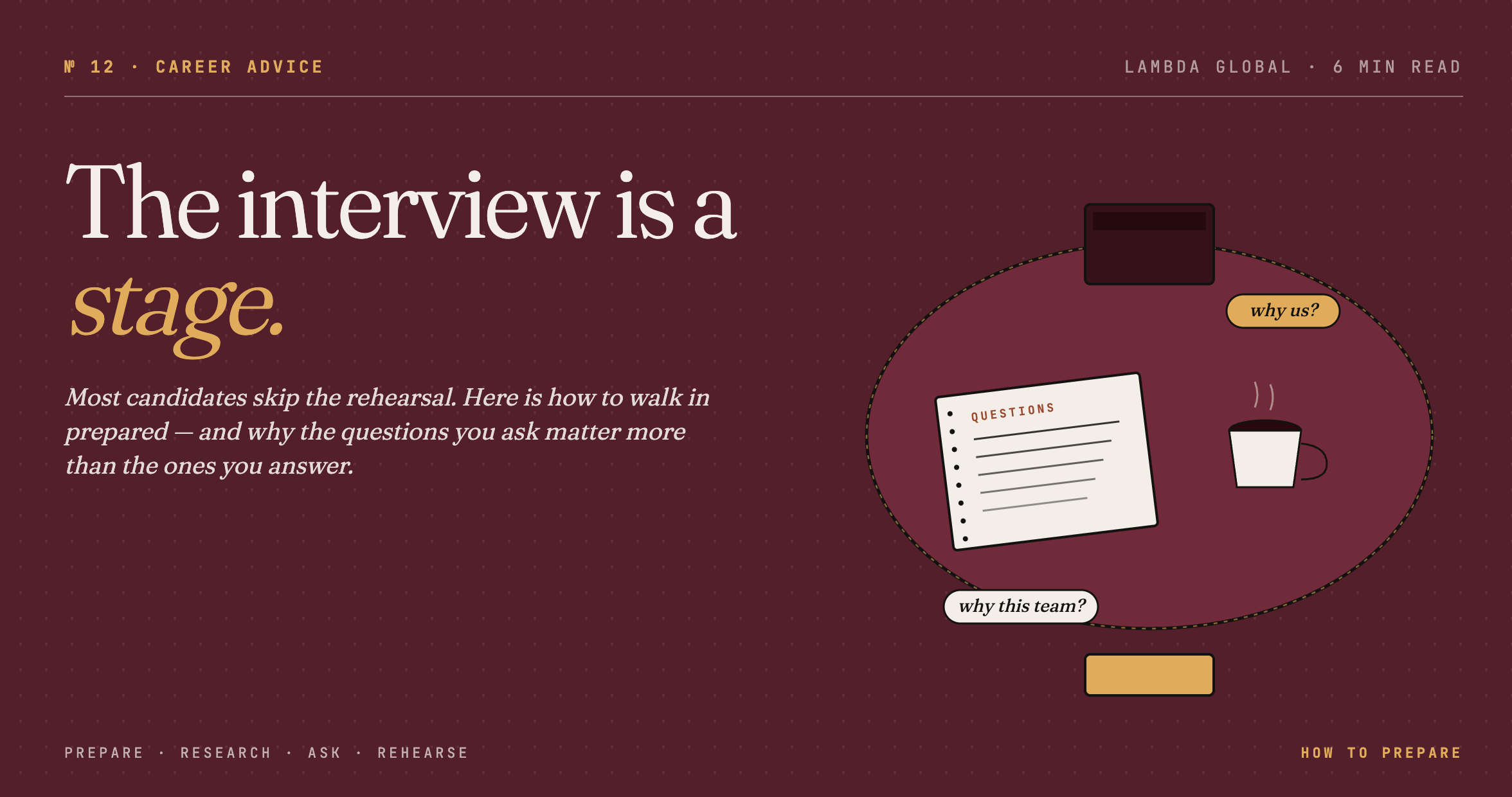
    Job interview is a stage for you to show off yourself and get the job you want. Unfortunately, many candidates fail to use this opportunity.

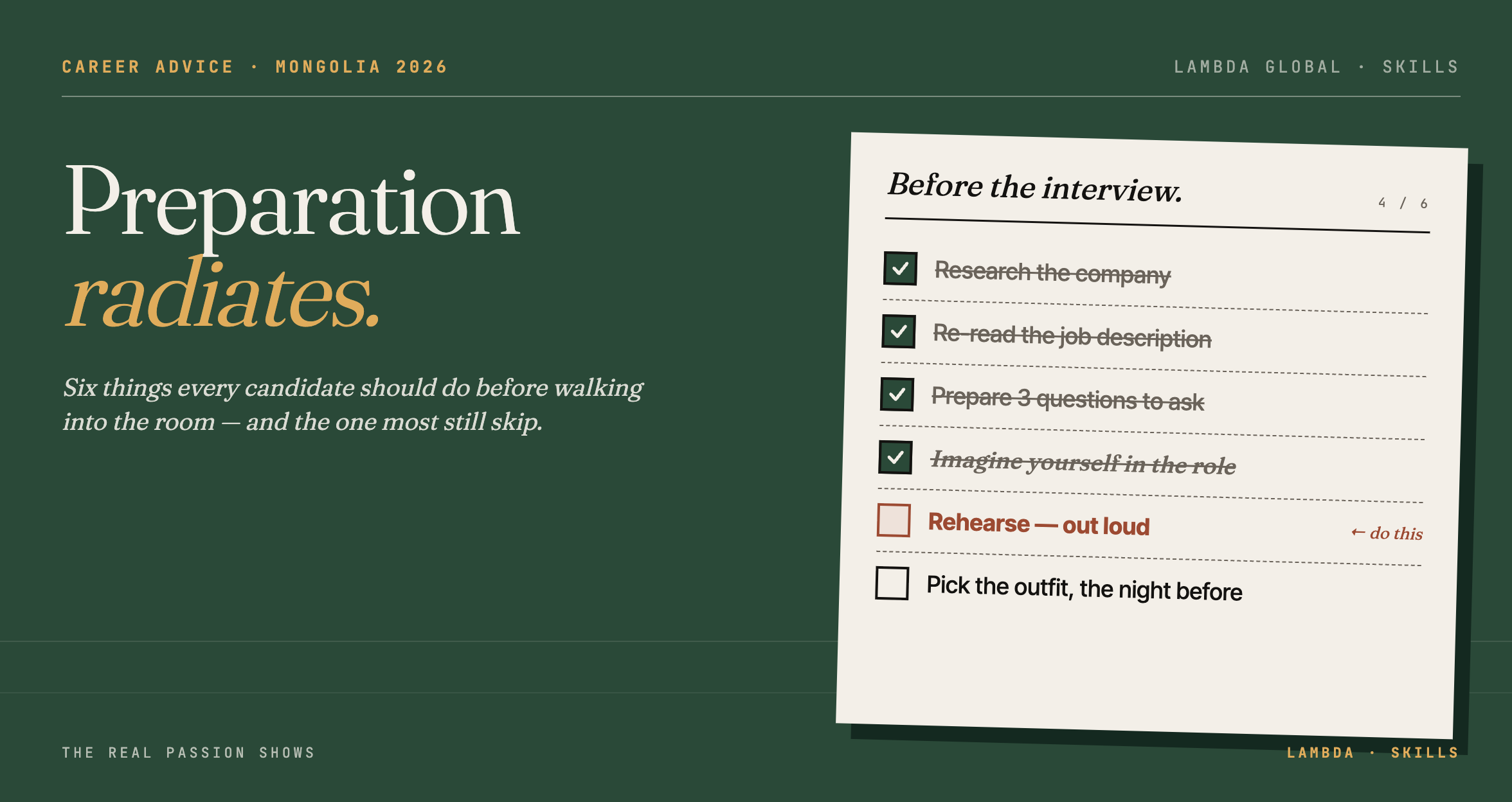
    Simple google search on interview preparation will tell you to do the following:
    – To do your research about the organization, its projects, products and recent news.
    – To analyze the role: fully understand the job description, prepare questions for clarity, provide an example of similar experiences,
    – To prepare your questions about the team or department, organization’s goals and values.

    All these seems to be an obvious feature to prepare. However, when conducting an interview with a potential candidate, I was surprised to see how many actually skip these steps. Most candidates skim through the vacancy ad without further research. It was obvious from the basic questions candidates ask. Some candidates even went on to request the interview team, to tell them about the organization and the project. Interview time is very limited. Potential employers would like to get as much information about you as possible and make a decision if you are suitable for the job. Nobody has time to inform you about the basics. Hence, it is better to do your homework, do the research, at least go to the organization’s website and social media.

    This, however, doesn’t mean you can’t ask any questions. In fact, you should ask questions. Asking a question, somehow refrained in Mongolian culture. From childhood we were raised to hold our opinions against adults, to be respectful and polite to them. Because of our culture, during the seminars and meetings, especially where most of the participants are strangers to each other, people ask minimal questions. Similar trend is evident at the interview. Towards the end of the interview, when the interview team asks “if there are any questions you would like to ask?”, most candidates respond “no”. Those who ask questions to clarify the job description or the organization’s long-term goal shows understanding and genuine interest in that position. Consequently, those stands out.
    During the preparation, if no question pops up to your mind, imagine that you are actually hired and working in that position. You start your job, you’re doing the tasks described in the job description, step by step. Imagine daily tasks and then long term, one year, two years… Questions will start emerge. Some questions might seem obvious or insignificant to you, but it will show how detailed you have thought about the position. In the end, there is no stupid question.

    There are many other ways to prepare for a job interview. One example would be watching a TV show, a useful one. The other day I have watched TV show on Central TV Mongolia – “the Interview” it’s called. I highly recommend this show to the new job seekers, especially those who don’t have any experience with an interview. In this show, actual organizations conduct an interview with potential candidates. The episode I have watched was with the MCS Coca Cola. You can learn various things from this show, including:
    – have a glimpse to the management team, including the CEO of the organization,
    – the questions they ask,
    – technical exams they take,
    – how to present yourself, including the outfit,
    – analyze the answers that candidates give, and think about the responses you would give,
    – analyze the body languages both the interview team’s and candidates’ side, when does they feel relaxed, when not.
    – impression that candidates left and which ones are selected at the end.


    Another great way to prepare yourself for a job interview is using an AI. The Lambda Global has Skills application to help the job seekers to enhance their relevant skills. From Skills you can go to the Career advice section, where it has an AI interview question generator. You should simply register as a talent to the Lambda Global. Then, upload your CV and click on the job position you would like to apply. You can select the language of the interview. Based on your CV and the job description AI will generate the potential questions with the possible answers. These questions will help you identify the matching skills that you have failed to recognize. Especially if you have rich experience in various organizations. AI is great at capturing even the little details you have mentioned in your CV. It not only provides questions, but also an opinion if your skills, at least the ones you have mentioned in your CV, matches the job description. It is the most important question that employers try to answer during the interview.

    The last, but perhaps the most important preparation would be a question to ask from yourself. Why do I want this position? Why do I want to work in this organization? The real passion radiates. Poor preparation is a sign of low interest in that job. Therefore, prepare yourselves well for the job you really want.
  • Why Mongolian Youth are Retreating from the “Salary War”

    Why Mongolian Youth are Retreating from the “Salary War”

    From Survival to Self-Expression 

    The job market in Mongolia is witnessing rapid changes in generational attitudes toward work. For the earlier generations, a job was a tool, a necessary mean to support a family and earn a living. For GenZ and Millennials, work is a critical part of their lifestyle, an expression of their value systems and an important mode of self-expression. 

    Modern Mongolian professionals quit unhealthy work environments with the same zeal they quit toxic personal relationships. It is the death of the era when employers could attract talents just by paying more. That is why The new era has set in which calls for commitment to shared values, commitment to company culture, and commitment to psychological safety. 

    “Red Flags” and the Cultural Filter 

    Today’s job seekers no longer passively attend interviews, merely marketing their skillsets. On the other hand, they examine companies to ensure that they fit their personal code of ethics. 

    Management styles, the demand for unpaid overtime, and conflict within teams are now major red flags deal breakers for top talent. They know that they can only bring out their best if given a supportive environment based on trust rather than micromanagement. It is not enough for organizations to have a boss, but they must communicate a healthy working culture. Companies that view employees purely as resources will experience massive talent shortages in the future. 

    The Power of Candidate Experience 

    The era of making blind decisions based entirely on salary is over. Candidate experience is the emotional experience a candidate feels and the quality of interaction they get throughout the process. 

    Modern youth are asking important questions: Does this company really value mental health? Do they invest in employee lifelong learning and growth? Most importantly, do they provide work-life balance? In the current Mongolian context, office comfort has changed. It now includes trust-based autonomy, flexi-hours, and policies that ensure employees’ well-being ahead of perks such as sofas or free coffee. 

    Digital Transformation and the Era of the “Transparent” Company 

    The information that previous generations needed to locate employment in newspapers is now acquired by contemporary talent with a single click, via LinkedIn, Zangia, and Lambda.Global. Digitization has made companies more transparent. 

    According to the Digital 2024: Mongolia report, internet access has reached 82% of the population, with LinkedIn users exceeding 540,000. This represents a transformation in the recruiting landscape. Data indicates that over 90% of candidates do preliminary job searches online and evaluate a company’s cultural standards via social media. They make investigations through the Facebook and Instagram pages to check the environment before applying for a job. If a company appears outdated or locked down on social media, it immediately raises such red flags and discourages talent from applying. 

    Matching the Pace of “Trends” 

    Recruitment in today’s world is not just an HR task but is an amalgam of watching the latest trends, building the desired culture and marketing. Attracting top talent means a company’s values must also strike the new generation, who prize sustainability, equity, and innovation above all else. 

    Researches reveal that only 35-45% of all employees in Mongolia feel assured and satisfied with their current jobs (ibid). The rest is disengaged and ready to leave, finding better workplace fulfillment in competing firms, encouraged by poor leadership or lack of employee growth opportunities. Being out of style today means more than just failing to keep up with technology, it means failing to understand mindset. To stay competitive you must turn your workplace from a cubicle prison into a creative hub in which talent can thrive. 

    Becoming the Pioneers of a New Era 

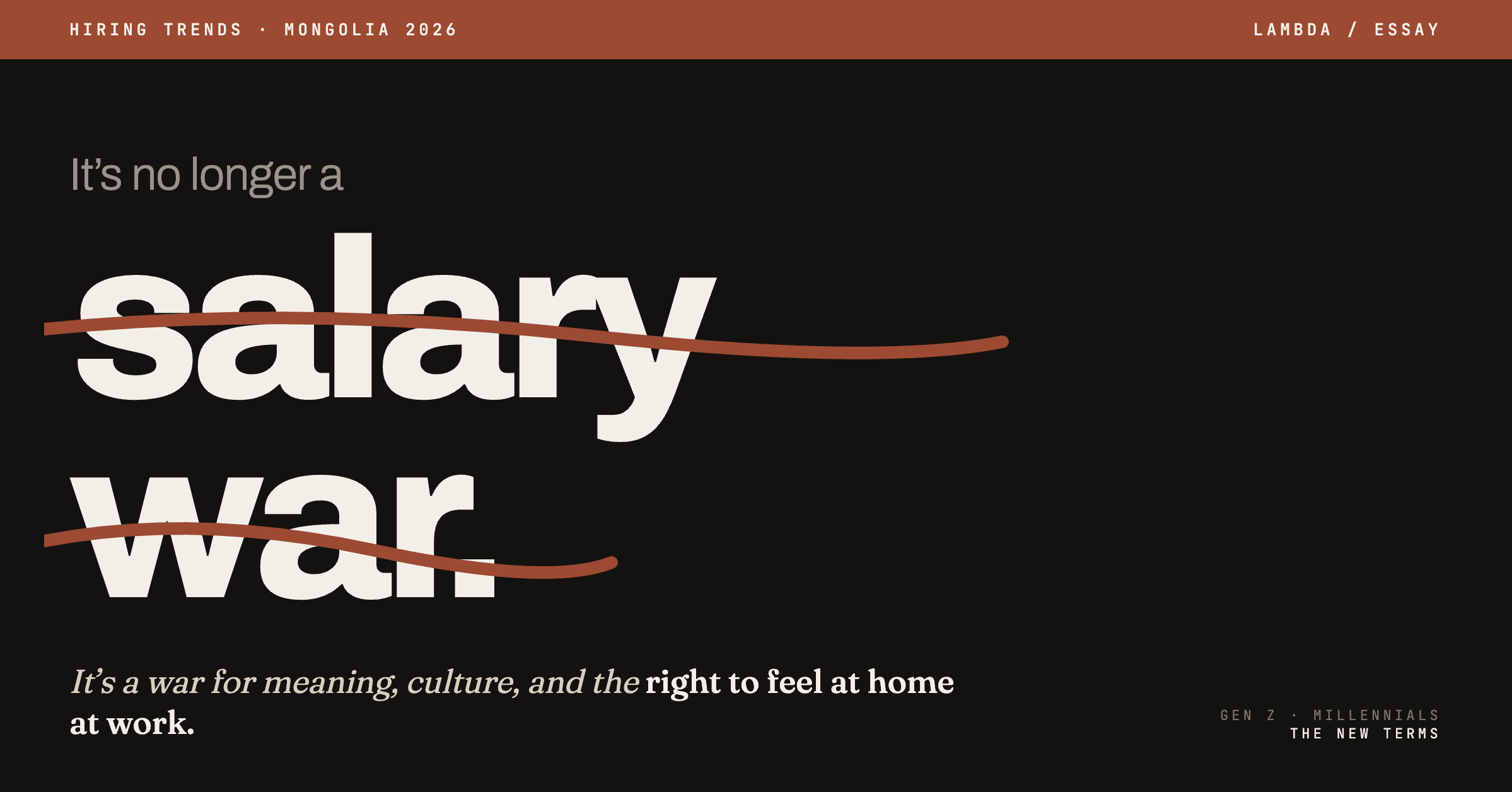
    Winning in the Mongolian talent market is for those that understand the needs of humans along with being able to keep track of current trends. This is not just the battle of salaries anymore, this is the battle for meaning, purpose and culture. The Mongolian youth are not looking for jobs. They want a home, not just a house, a place with enough stimuli for development, respect, and mental peace. 

    Companies that recognize this demand and take action will secure the future of Mongolia’s talent pool. Recruitment in the new era is about creating an environment to enable people reach their highest potentials. 

    1. Digital 2024: Mongolia – DataReportal Report 

    2. LinkedIn Global Talent Trends – Workplace Insights 

    3. National Statistics Office of Mongolia – 1212.mn